 SSY
SSYWhy ADHD makes starting the hardest part
Starting feels impossible because your brain isn't being lazy. It's running on different fuel.
May 3, 2026 · 5 min read
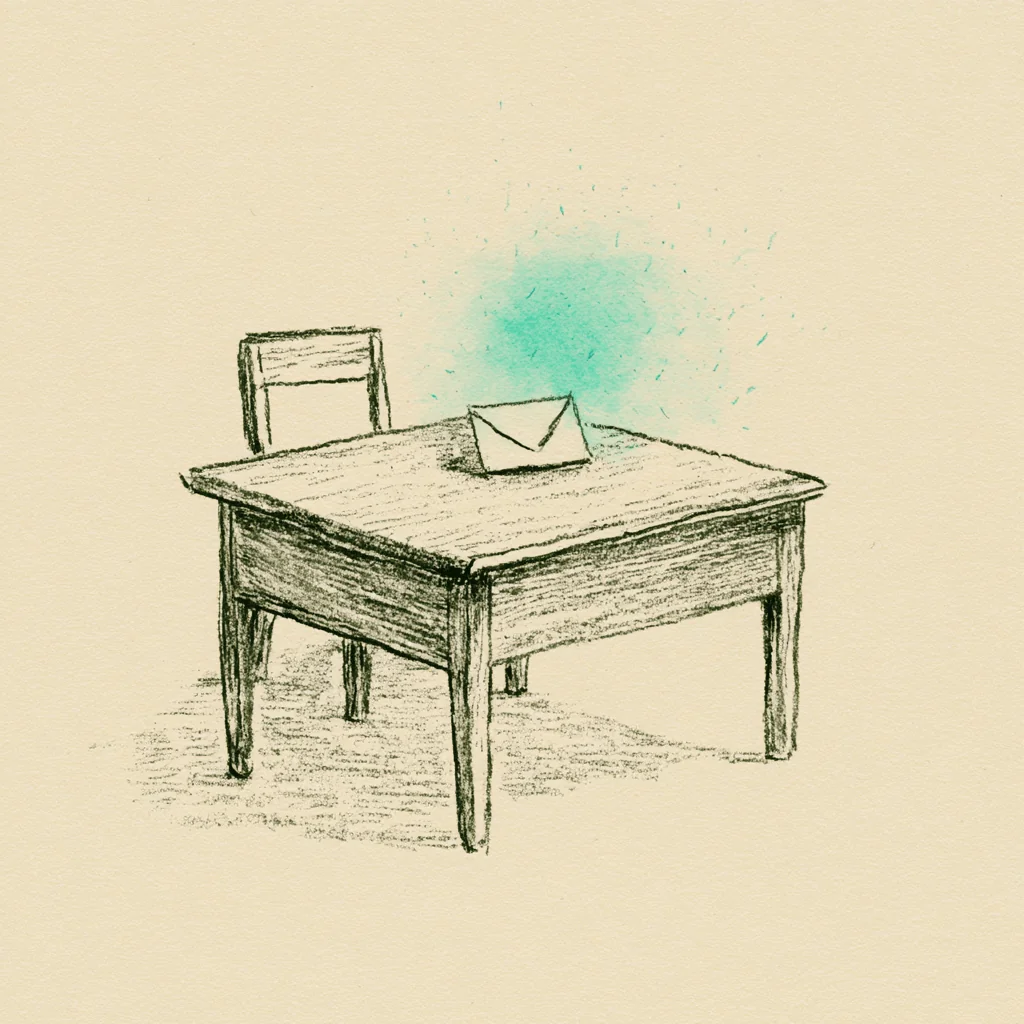
You open the laptop. You know exactly what you need to do. The task is clear, the deadline is real, the consequences of not doing it are not abstract. And yet you sit there, frozen, scrolling through a news site you don't care about, while a small voice somewhere behind your forehead asks why you can't just start.
If you have ADHD, you've had this morning. Probably this week. Probably today. The shame that follows is its own second job - the spiral of telling yourself you're undisciplined, lazy, broken in some way that other people aren't. None of that is true. What's actually happening is more interesting, and once you see it, it's easier to stop fighting yourself about it.
It isn't laziness. It's a dopamine problem.
Nora Volkow's research group at the National Institutes of Health used PET imaging to look at the dopamine system in adults with ADHD. They found lower levels of dopamine receptors and transporters in the nucleus accumbens and midbrain - two regions at the heart of motivation and reward. The reward circuitry that makes a "boring" task feel doable in a neurotypical brain is, in an ADHD brain, running on lower fuel.
That has a knock-on effect on starting. Tasks that lack urgency, novelty, or interest fail to clear the dopamine threshold the brain needs to commit to action. The prefrontal cortex - the bit responsible for planning and initiating - also shows reduced activation in ADHD during exactly the moments executive function is needed most. The hardware that should be saying "go" is dimmer.
The activation energy gap
Chemistry teachers talk about activation energy: the bump of effort that gets a reaction started before it can run on its own. Task initiation works the same way. There's a moment, before any work happens, where you have to put energy in just to begin. For most people, motivation, urgency, or interest covers that bump for them. For an ADHD brain, that bump is steeper, and the fuel arrives less reliably.
This is why advice like "just start" feels insulting when you're stuck. It's not that you don't want to start. It's that the chemical handshake between intention and action - the thing that happens silently in a neurotypical brain - has to be done manually in yours, every single time. That's exhausting. It's also not your fault.
The Wall of Awful
Beyond the neurology, there's an emotional layer. The ADHD educator Brendan Mahan calls it the Wall of Awful: every task you've avoided, every email you should have answered weeks ago, every project that started well and stopped - they pile up in front of the next attempt. By the time you sit down to do the thing, you're not just facing the thing. You're facing the wall.
A 2025 qualitative study of ADHD adults described this as rejection and shame compounding around unfinished work, with participants reporting that the dread of starting was often heavier than the work itself. The wall isn't a character flaw. It's an accumulated weight. And it gets lighter when you stop adding to it.
What actually moves the needle
Three things, all of which have research behind them, all of which you can do today.
The first is breaking work into micro-steps. Not chapter-sized chunks - fifteen-to-twenty-five-minute pieces that are concrete enough to picture yourself doing. "Write the report" isn't a task. "Open last quarter's report and copy the template" is a task. The brain can clear an activation gap that small. It can't clear an abstract one.
The second is artificial urgency through a timer. The anticipation of a deadline produces dopamine, even a small one - and a visible countdown takes the deadline out of your head and onto a clock you can see. A 2021 study in the Journal of Clinical Psychology found structured timeboxing improved task completion in adults with ADHD by 27 percent compared with unstructured work. The container helps. It tells your brain the work has a beginning and an end.
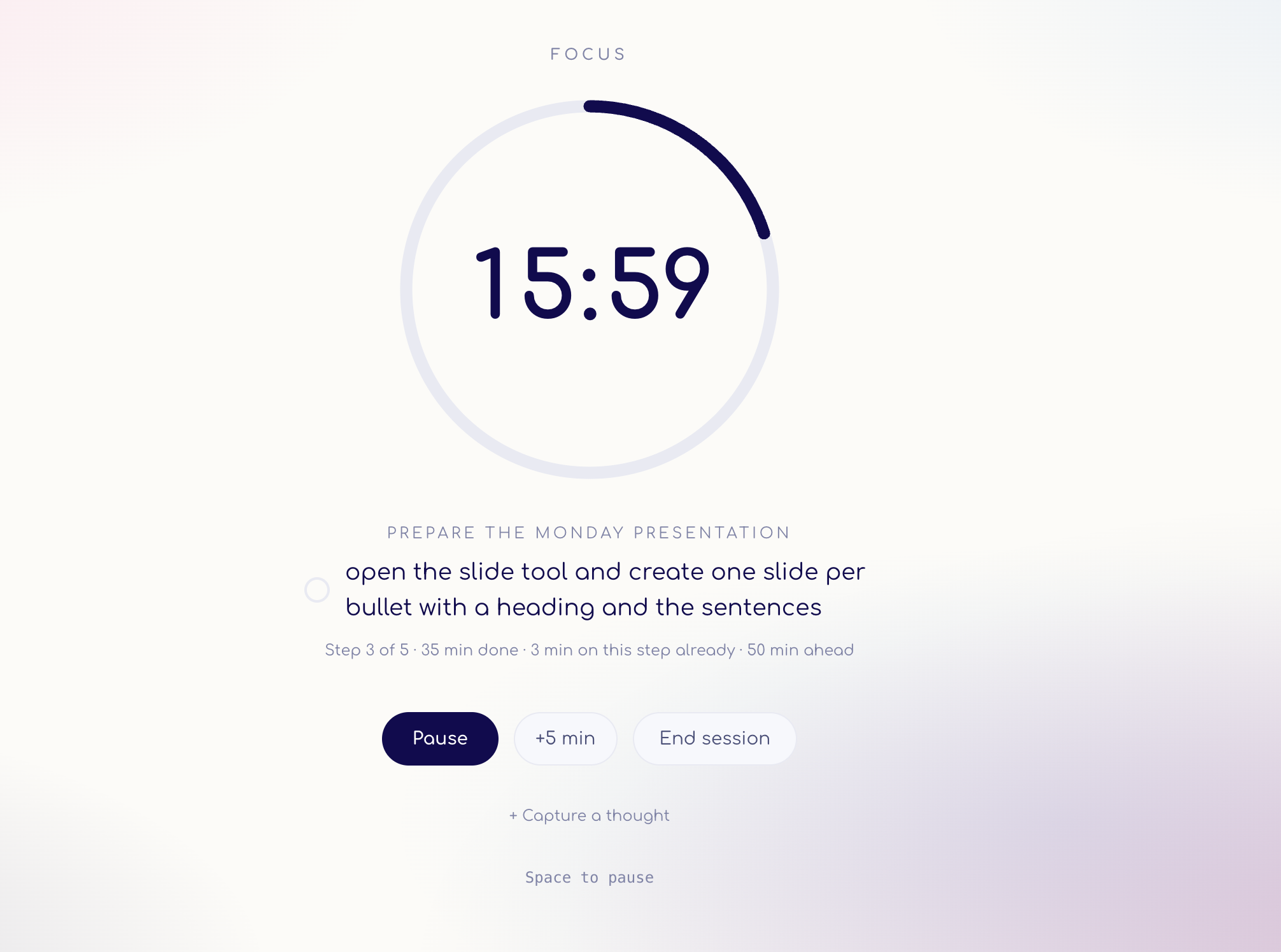
The third is reducing decision load. If the next step is already chosen - written down, sitting in front of you, with no further deliberation needed - you don't burn the small amount of executive function you have on figuring out what comes next. You spend it on doing.
A gentler shape for the work
The point isn't to fix the brain. The brain isn't broken. The point is to meet it where it is - to build the work around how attention actually moves, instead of around how productivity culture says it should.
This is the shape Mossy is built around. You write down what you need to do. If something feels too big, Mossy breaks it into small concrete steps. The focus timer takes one of those steps and gives it a container. When the block ends, you stop. The next step is already waiting. There is no streak to keep, nothing to crush, no productivity score. Just one step, then the next.
If starting is the hardest part, the answer isn't to push harder against it. It's to make starting smaller - small enough that the activation gap closes itself. Then you've already started, and the rest of the work is just the rest of the work.
References
- Volkow et al. - Motivation deficit in ADHD and the dopamine reward pathway (Molecular Psychiatry, 2010)
- Neural correlates of executive function in children with ADHD: ALE meta-analysis of fMRI studies (2024)
- "Dysregulated not deficit": qualitative study on symptomatology of ADHD in young adults (2023)
- Pomodoro technique and timeboxing research for ADHD adults - review
Mossy is a gentle planner and focus companion built for ADHD brains. No streaks, no shame - just one step at a time.